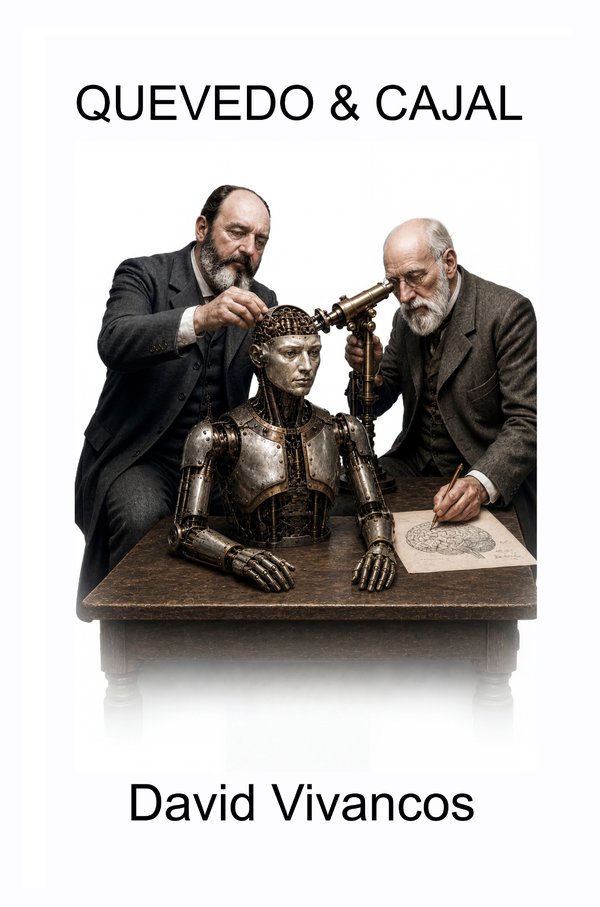
Front cover of Quevedo & Cajal: two men in 19th-century dress examine a brass automaton on a walnut table.

A book by David Vivancos. Foreword by Hon Weng Chong, founder and CEO of Cortical Labs.

Two boys were born in Spain in 1852. Between them, they drew the blueprint for AGI.

Santiago Ramón y Cajal found that the brain is a society of discrete cells that rewire with use. Leonardo Torres Quevedo built the first machine that decided its own moves, then specified an automaton with senses, memory and discernment. Every neural network and every autonomous agent running today instantiates what they wrote down. Almost nobody says their names. This book does.

Hardcover, paperback and Kindle. 487 pages. Also en español.

This is not a history book. It is the lost manual of artificial intelligence.

The canonical story of AI begins in the 1940s, with Turing, McCulloch and Pitts, von Neumann and Wiener. Quevedo & Cajal tells what that story left out: two men, one country, the same birth year, and a wall of silence between two chairs a few metres apart at the Royal Academy of Sciences in Madrid.

Their work was never assembled into one picture during their lifetimes. This book assembles it, from the primary sources, and reads it against the agents, humanoids, brain–computer interfaces and living neurons on chips of 2026. It was written by someone who has spent thirty years trying to build the machines they specified.

  1. 1894

    Cajal describes learning as the strengthening of contacts between neurons that fire together. Donald Hebb writes the same rule in 1949, and it carries his name.

  2. 1912

    El Ajedrecista plays king-and-rook endgames against any human opponent and calls check with a phonograph voice. The first machine in history that decides rather than repeats.

  3. 1914

    Ensayos sobre automática: an automaton that receives impressions, consults its memory and orders the desired operation, able to discuss omni re scibili, everything that can be known. A specification, not a metaphor.

One gave us the hardware. The other, the software.

Read together, the two men wrote an almost complete description, in the vocabulary of 1914, of what is being built today. The book follows each half and then shows where they meet.

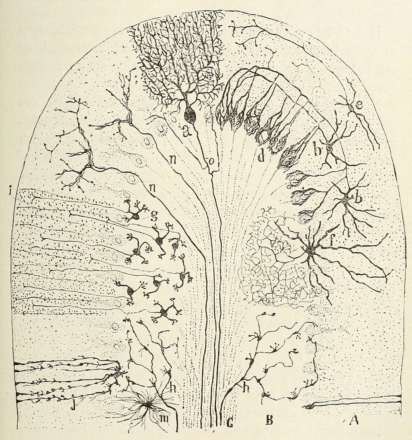
Cajal's 1894 semi-schematic cross-section of a mammalian cerebellar convolution, drawn in ink.
Cerebellar convolution, Santiago Ramón y Cajal, 1894

Cajal, the substrate

The unit
The neuron as a discrete, individual, complete cell, against the whole European consensus of 1888.
The connection
The synapse, described in structure before Sherrington gave it a name.
Plasticity
“Every man can be, if he so determines, the sculptor of his own brain.” Read in 1897 as a moral exhortation; read in 2026 as a description of every weight update.
The architecture
Retina, cerebellum, cortical layers, spinal cord: feed-forward, parallel and layered processing, drawn in India ink.
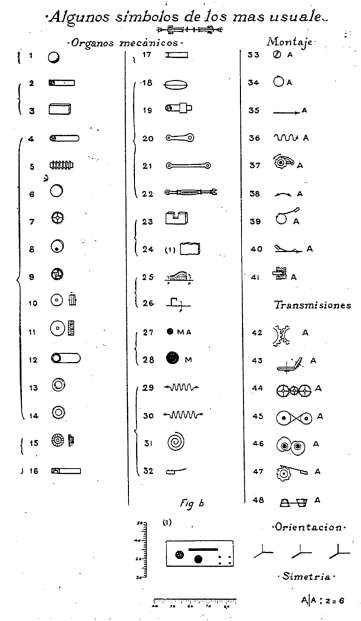
Torres Quevedo's 1907 notation of mechanical organs: a table of symbols for transmissions and mechanisms.
Notation of mechanical organs, Leonardo Torres Quevedo, 1907

Quevedo, the control

Perception
The automaton that receives impressions from its environment.
Memory
The automaton that consults its earlier impressions when it needs them.
Discernment
The automaton that orders the appropriate operation among several: the conditional branch, built in brass, in 1911.
Action
From the Telekino, the first radio-controlled vehicle, to the chess player: closing the loop in the physical world.

Two chairs, a few metres apart, at the Royal Academy of Sciences. Twenty-five years of coinciding sessions. No letter between them has ever been found. The two halves clicked into place a century later.

Two empty chairs a few metres apart in the hall of the Royal Academy of Sciences in Madrid.
Cajal was elected to the Royal Academy of Sciences in 1895, Torres Quevedo in 1900. Their chairs stood a few metres apart for twenty-five years.

Sons of 1852

The dates the book is built on. Scroll along the strip, or use the arrows.

  1. 1852

    May, Petilla de Aragón: Santiago Ramón y Cajal is born. December 28, Santa Cruz de Iguña: Leonardo Torres Quevedo is born. A country on the downslope of empire produces, in one generation, a concentration of talent.

  2. 1887

    Cajal learns Golgi's silver stain in Luis Simarro's kitchen laboratory in Madrid. The same year, Quevedo patents a passenger cableway carried by several wires: safety as redundancy, decades before the discipline had a name.

  3. 1888

    Cajal's year of wonders. The nervous system is not a continuous mesh but a society of individual cells. Sixteen-hour days: staining in the morning, drawing in the afternoon, writing at night.

  4. 1894

    In Barcelona, Cajal states that intellect proceeds through the modification of the contacts between neurons. The learning rule that AI calls Hebbian, fifty-five years before Hebb.

  5. 1895

    Memoria sobre las máquinas algébricas: a machine is not a transformer of force but a formula made of iron. Turing will formalise the same idea, in a different idiom, in 1936.

  6. 1906

    Cajal shares the Nobel Prize with Camillo Golgi, whose theory of the brain he had refuted. The first Spaniard to win a scientific Nobel.

  7. 1912

    El Ajedrecista. Every earlier chess automaton had been a fraud with a human inside. This one moves its own piece toward checkmate, without an audience. Decision stops being a biological monopoly.

  8. 1914

    Ensayos sobre automática: senses, members, energy, discernment, the minimum anatomy of any autonomous system. The 1915 French edition adds floating-point notation, forty years before IEEE 754.

  9. 1920

    The electromechanical arithmometer reads a keyboard, decides the operation, computes, prints and returns to the margin. A read-eval-print loop before the term existed.

  10. 1934

    Cajal dies in Madrid in October. Quevedo follows in December 1936, as civil war closes the country. Neither leaves the school of disciples that would have carried the names across the Atlantic. The Great Silence begins.

  11. 1943

    McCulloch and Pitts open the most cited paper in AI with Cajal's neuron, taken as an obvious fact. In Paris, in 1951, Norbert Wiener sits down at the 1912 chess automaton and loses.

  12. 2026

    Agents, humanoid robots, brain–computer interfaces and human neurons cultured on chips run the specifications. The two halves click audibly into place. This book is the record.

Inside the book

Twelve chapters, each closing its sections with a one-paragraph key: what the fact from 1888 or 1914 means for the machine on your desk in 2026.

Pages
487
Chapters
12
References
100+
Languages
2
Read the introduction (PDF)
  1. 1Sons of 1852

    A spring morning in 2026, a mountain village in May, a Cantabrian valley in December. Two childhoods, two trajectories, and the compass for everything that follows: hardware and software.

  2. 2The Boy Who Built What Didn't Exist

    Molledo and the inheritance of valleys, the silent years, the 1895 memoir that redefined the machine, cableways from Molledo to Niagara, Paris, and the first chess machine.

  3. 3The Artist Who Drew the Invisible

    Petilla, the stone village. Medicine or art. Cuba, 1874. Simarro's kitchen, the breakthrough, Berlin in October 1889, and the road from Madrid to the Nobel.

  4. 4A Machine That Calculates

    A sentence fifty-two years apart. Dynamic polarization, the synapse, the rebirth of 1943, the artificial neuron and its four generations, and what Cajal would not have anticipated.

  5. 5From Thoughts to You

    The retina as the first feed-forward network, the cerebellum as parallel architecture, the cortex as layered processing, the growth cone, the dendritic spine, the drawings. The blueprint, assembled.

  6. 6The Brain That Sculpts Itself

    A sentence that is a life. Cajal's fight, the 1894 principle, the long rejection, the spine in real time, the parallel story in humans, the current struggle of AI, and Neuraxon: a sketch of a sculptor.

  7. 7The Machine That Decides

    Computing without a computer: the equation solver, an algorithm in brass. The Telekino. El Ajedrecista. January 1951, a ritual vindication in Paris. What Turing inherited. Quevedo the philosopher.

  8. 8The Automaton That Learned

    The memoir that no one read. Conditional branching in 1911, the four pillars, a commutator network in brass and copper, trial-and-error and floating-point prophecies, and the lineage Quevedo planted.

  9. 9Where Hardware Meets Software

    The wizard of kinematics and the engineer's silence. The first translator. 1943, the formal fusion. The borrowed name. Turing's question. What the fusion enables, and what it does not yet.

  10. 10The Great Silence

    Two deaths on the brink. The disciples that weren't. Spain beyond 1936. How a canon closes, and the slow recovery.

  11. 11Everything We Built on Them

    Cajal's unit, abstracted. The Cajalian architecture. Plasticity as learning. The Quevedian program and automaton. Brain–computer interfaces. Wetware: living neurons on a chip.

  12. 12The Grandfathers of AGI

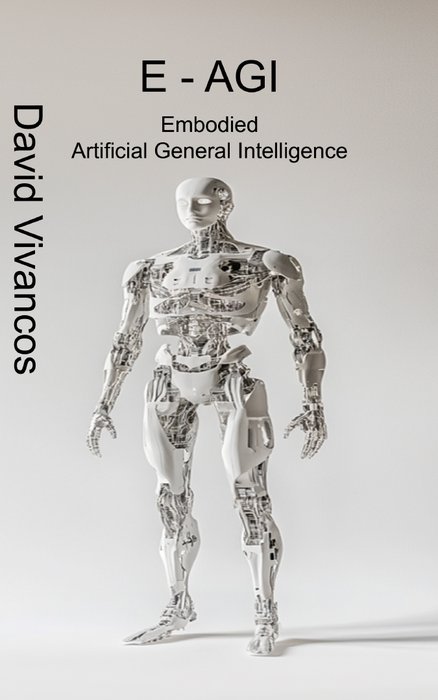
    What AGI still needs. From choice to OpenClaws, world models and coordinate systems, from growth cone to test-time reasoning, what the brain does off-hours, the mothership, rules that modify themselves, E-AGI as the next us.

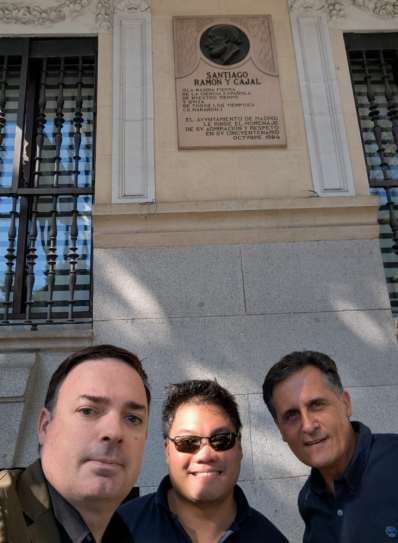
David Vivancos, Hon Weng Chong and Jimmy Pons standing beneath the memorial plaque at the house where Cajal lived and died, Madrid.
David Vivancos, Hon Weng Chong and Jimmy Pons at Cajal's home on Calle Alfonso XII, Madrid, 2026.

From the foreword

History is often written by the victors. This book will finally paint the faces onto the giants whose shoulders stand the most important technological breakthroughs in the 21st century.

Hon Weng Chong, MD, founder and CEO of Cortical Labs, maker of CL1, the first code-deployable biological computer. Named to the TIME100 AI 2026.

Chapter 11 follows his work in detail: human cortical neurons cultured on a silicon array learning to play Pong in five minutes. Cajal's cells and Quevedo's control loop, sharing a circuit board for the first time.

Who this book is for

If you build AI

You will find the architecture you work with every day described in primary sources you have never been shown: the threshold unit, the conditional branch, floating point, the stored program, the agent loop. And the three gaps the book argues still separate today's systems from AGI.

If you study the brain

You will see Cajal's drawings read as engineering: the retina as a convolutional network, the cerebellum as a parallel perceptron, the growth cone as a search procedure, the dendritic spine as the ancestor of every weight.

If you love the history of science

You will get two lives told in full, a canon examined at the moment it closed, and a case for intellectual justice that is argued from documents, not from national pride.

Get the book

Print editions are sold through Amazon in every country it ships to. The Kindle edition is available worldwide.

Hardcover

The case-laminate edition shown above. Cover to cover, the book as it was designed to sit on a desk.

Buy the hardcover

Paperback

487 pages, 6 by 9 inches. Every drawing, diagram and note of the hardcover.

Buy the paperback

Kindle

Read on any Kindle device or app, with the diagrams in full.

Buy for Kindle

En español

Quevedo y Cajal: La historia de los primeros arquitectos de la AGI. Edición en tapa blanda y Kindle.

quevedoycajal.es

Read it inside Artificiology

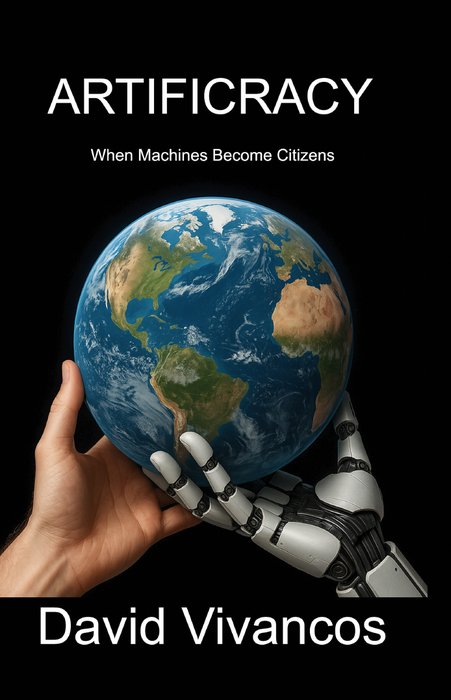
The full book in PDF is included with the Artificiology platform membership, alongside the Artificiology trilogy, the Artificracy audiobook, the live E-AGI Barometer with its 144 metrics, the AGI School and the reconstructed minds of the Encyclopedia of Lost Minds. $99.99 a year, cancel anytime.

Portrait of David Vivancos in a black shirt against a pale background.

David Vivancos

A science, art and technology entrepreneur since 1995, David Vivancos has started five ventures and dozens of initiatives across the Internet, electronic art, virtual reality, nanotechnology, neurotechnology, brain–computer interfaces and deep learning. He has given more than 500 keynotes, seminars and workshops in Europe, the United States and Asia, and advised 35 or more boards and CEOs on the road from the digital world to the automated one.

He has spent more than 29,000 hours on general artificial intelligence research, including the bio-inspired Neuraxon architecture built with Dr José Sánchez, kick-started the field of Artificiology, built MindBigData, the largest open dataset of brain signals for machine learning, and is the author of seven books and the Encyclopedia of Lost Minds.

He learned to program at eight, on a street in León named after Ramón y Cajal, on a machine descended from the automaton Torres Quevedo built in Madrid in 1912. He did not know either fact at the time. This book is the explanation he wishes someone had given him.

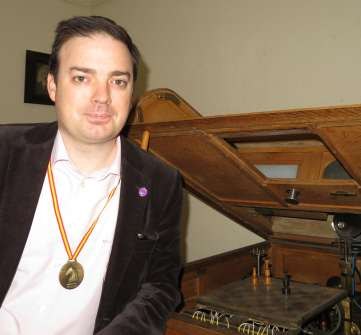
David Vivancos, wearing a medal, seated beside the original El Ajedrecista chess automaton.
With El Ajedrecista, the 1912 chess automaton, in 2016.

“One was the workshop, the other the brush; they thought with their hands, and what they left us are the blueprints.”

David Vivancos, on Leonardo Torres Quevedo and Santiago Ramón y Cajal